
Your Team Needs More Stress: The case for shared adversity
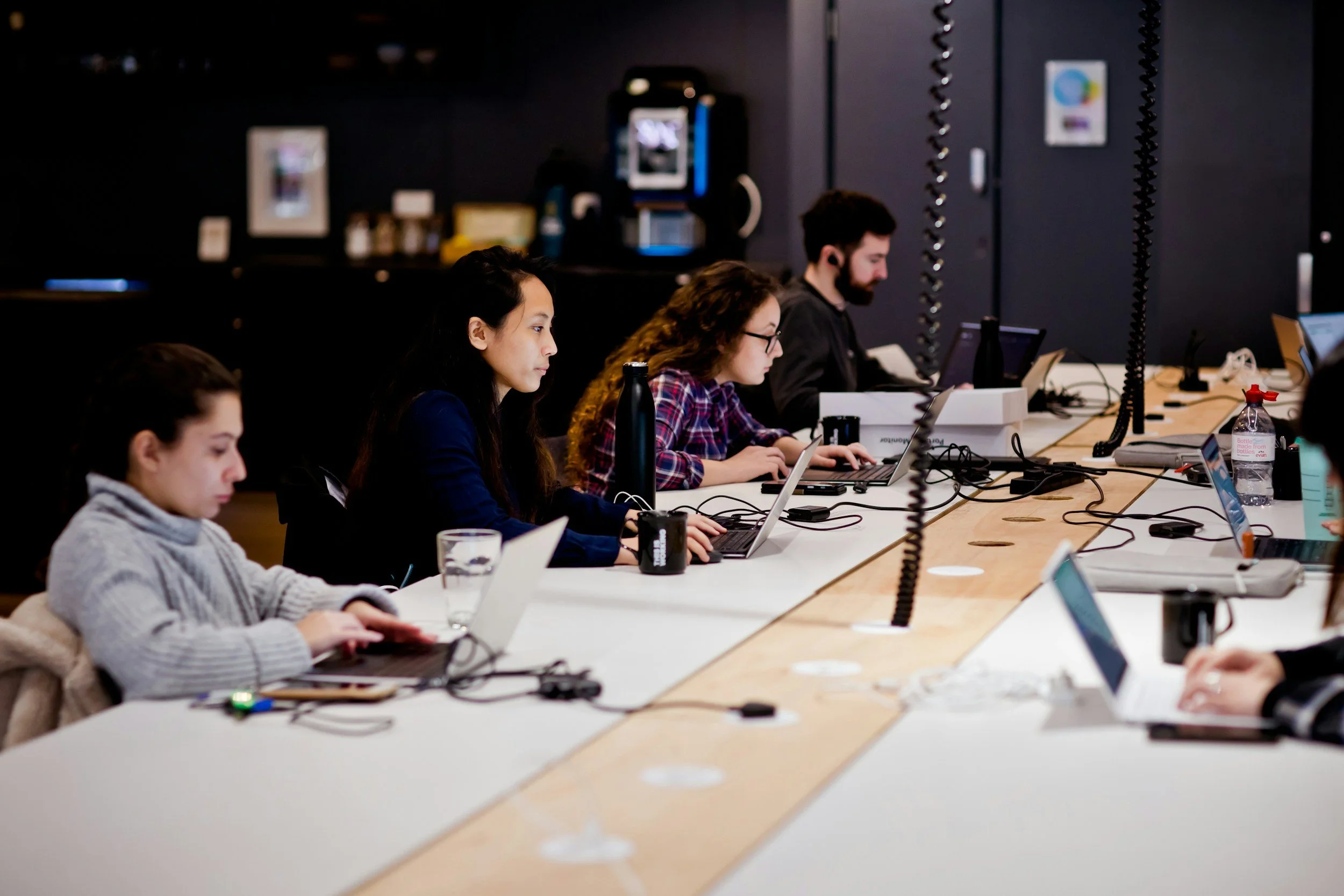
A team works through a simulation in a corporate Emergency Operations Centre (EOC).
In real incidents, teams don’t rise to the level of their binders. They fall to the level of their relationships, habits, and shared understanding.
That’s why emergency simulation training must do something your policy library can’t: build cohesion and camaraderie the honest way—by putting people into controlled stress, forcing collaboration, and letting a team emerge stronger together.
How stress can build camaraderie
“Stress” gets treated like a contaminant. In measured doses, it’s also a feature.
When a scenario feels real—time pressure, uncertainty, competing priorities—your brain and body shift into a performance state. Cortisol (the “stress hormone”), is part of that shift. It mobilizes energy, sharpens attention, and flags “this matters” so the brain is more likely to store the experience and its lessons. Stress can enhance aspects of learning and memory formation, even while it can impair other functions (like calm recall) depending on timing and intensity. (Vogel & Schwabe, 2016).
Now add the social layer.
Humans don’t just endure stress individually; we often respond socially. The “tend-and-befriend” model describes stress-linked affiliation behaviours—seeking connection, coordination, and support—because that improved survival odds in our evolutionary history. (Taylor, 2006).
More directly: research has found that cortisol can modulate affiliative responses under acute social stress, shaping how people connect and behave with one another in the moment. (Berger et al., 2016).
And shared adversity is a bonding engine. Experiments have shown that shared painful experiences can increase bonding and cooperation between people who go through the discomfort together. (Bastian et al., 2014).
Put those together and you get the basic mechanism:
A credible scenario triggers manageable stress.
Manageable stress increases attention and salience.
The team coordinates to get through it.
“We did that together” becomes a real social bond, especially when the exercise is followed by a good debrief.
In training, the goal is to create a kind of “good stress” that builds capability and connection.
The evolutionary logic: we’re built for interdependence
Emergency management is, at its core, structured interdependence.
Humans became unusually cooperative partly because survival increasingly depended on collaboration—first in small-scale, mutually dependent tasks, then scaled up to group life with shared norms and coordinated action. (Tomasello et al., 2012).
Culture amplified that cooperation. Shared learning and group-level competition shaped stronger cooperative motives and behaviours over time. (Boyd & Richerson, 2009).
That matters for exercise programs because it reframes what we are actually building. It is not just about becoming good at tasks; rather, it is building a team’s ability to cooperate under uncertainty.
What simulation training changes inside an organization
Most teams already “get along.” That’s not the same as being cohesive under pressure.
Cohesion, in emergency terms, looks like:
fast role clarity
shared mental model (“what’s happening, what matters, what we’re doing next”)
calm, candid communication
willingness to ask for help early
trust that decisions are made for the right reasons
Teamwork training has been shown to improve teamwork behaviours and team performance in controlled intervention studies. (McEwan et al., 2017).
In healthcare contexts specifically, simulation-based training has been systematically reviewed as a method to improve teams’ human factors skills (communication, leadership, coordination, situational awareness). (Abildgren et al., 2022).
In plain language: well-designed simulation improves how teams behave together, not just what they know individually.
That is where camaraderie comes from. It’s earned through competent collaboration (not icebreakers).
The cohesion loop
If you want cohesion and capability, you need three ingredients working in sequence:
1) Stress, deliberately dosed: The scenario must carry enough realism to matter—time pressure, uncertainty, competing demands—but stay within a safe envelope. (Vogel & Schwabe, 2016).
2) Structure, visibly enforced: Clear roles, a defined decision process, and disciplined communications create “rails” the team can run on. That structure makes stress tolerable and teamwork learnable.
3) Story, captured in debrief: The debrief turns experience into shared meaning: what we saw, what we assumed, what broke, what worked, what we change. That shared narrative is a major driver of cohesion.
When teams repeat this loop, bonds form for the same reason they form in real incidents: interdependence plus shared stress plus shared learning.
Choosing the right exercise type
Canadian emergency management guidance commonly emphasizes exercises as part of preparedness and program maturity. Public Safety Canada’s emergency management resources include exercises as a core preparedness activity. (Public Safety Canada, n.d.).
In practice, the fastest way to build cohesion is to progress rather than “go big” immediately:
Tabletop exercise: decision-making, priorities, role clarity.
Functional exercise: command-and-control and coordination in real time.
Full-scale exercise: realistic operations, logistics, real-world challenges.
This progression matters because cohesion is partly physiological: you earn trust by repeatedly surviving manageable stress together. (Taylor, 2006; Berger et al., 2016).
Designing simulations that build camaraderie
A simulation that strengthens the team has a very specific feel: intense, focused, respectful, and worth everyone’s time.
Here are the design choices that most reliably produce that outcome:
Use intact teams whenever possible. Cohesion grows when people who will rely on each other in real incidents practice together.
Make the scenario “close to home.” Use your building, your comms tools, your escalation pathways, your constraints.
Create pressure through ambiguity, not cruelty. The goal is realistic decision stress, not humiliation.
Force collaboration points. Design injects that require handoffs, tradeoffs, and shared priorities.
Protect psychological safety. Participants will not take healthy risks if the exercise feels like a performance review.
Debrief like it matters. A good debrief is where capability and camaraderie become permanent.
Track actions publicly. If nothing changes after the exercise, people learn cynicism, not teamwork.
This is also where cortisol becomes your friend. You want enough activation that learning sticks, and enough safety that people stay open. (Vogel & Schwabe, 2016).
Common simulation failures
These are the patterns that reliably sabotage cohesion-building exercises:
Exercise theatre. Everyone reads their lines, nothing feels real, and the team learns to treat exercises as paperwork with snacks.
The “gotcha” facilitator. If the vibe is punishment, people hide problems and protect ego. Trust collapses.
No role clarity, then blame. Confusion is fine. Blame is not. Confusion plus blame teaches silence.
Unrealistic scope. If the scenario requires superhero staffing, the debrief becomes fantasy.
Skipped debrief (or a shallow one). Without reflection, you get adrenaline with no learning—and the only bond that forms is mutual annoyance.
No follow-through. Unclosed actions are a slow leak of credibility. The next exercise starts at half trust.
A short scenario vignette
It’s mid-January. Overnight temperatures sit below -20°C. A storm knocks out a transmission line. Generators carry the load, but the building is losing heat. At the same time, a routine network change triggers an authentication issue, and staff can’t access key critical applications.
None of these issues is “the big one.” Together, they create the big one.
In a well-run simulation, you see the cohesion story unfold:
Facilities and IT establish a shared situational picture early.
The Incident Management Team names two priorities and refuses to chase ten.
Leadership gets a clear operational forecast, not vague reassurance.
Communications aligns internal updates so rumours don’t fill the vacuum.
Everyone learns what assumptions failed: fuel delivery windows, warming plans, manual workflows, escalation thresholds.
Afterward, the debrief is blunt and calm. People laugh a little, because they just survived a hard thing together.
That’s camaraderie with operational value.
Making cohesion durable: repetition and shared narrative
One exercise can create a spark. A program creates a culture.
A steady rhythm of smaller sessions (micro-drills, short tabletops, role-based walk-throughs) keeps interdependence active, stress manageable, and learning cumulative. Over time, the team develops a shared playbook that lives in people, not binders.
This aligns with broader emergency management thinking in Canada that positions preparedness as an ongoing capability, not a one-time deliverable. (Public Safety Canada, 2017).
A calm next step
If you want exercises that build cohesion—faster decisions, stronger comms, and a team that actually likes working under pressure—Boreal Praxis can help design and facilitate a simulation program that fits your realities: staffing, union environment, clinical priorities, IT constraints, and reputational risk.
References
Abildgren, L., Lebahn-Hadidi, M., Thomsen, M. K., Konge, L., & Sørensen, J. L. (2022). The effectiveness of improving healthcare teams’ human factor skills using simulation-based training: A systematic review. Advances in Simulation, 7, 12. https://doi.org/10.1186/s41077-022-00207-2
Bastian, B., Jetten, J., & Ferris, L. J. (2014). Pain as social glue: Shared pain increases cooperation. Psychological Science, 25(11), 2079–2085. https://doi.org/10.1177/0956797614545886
Berger, J., Heinrichs, M., von Dawans, B., Way, B. M., & Chen, F. S. (2016). Cortisol modulates men’s affiliative responses to acute social stress. Psychoneuroendocrinology, 63, 1–9. https://chenlab-psych.sites.olt.ubc.ca/files/2015/08/Berger-et-al-PNEC-2016.pdf
Boyd, R., & Richerson, P. J. (2009). Culture and the evolution of human cooperation. Philosophical Transactions of the Royal Society B: Biological Sciences, 364(1533), 3281–3288. https://doi.org/10.1098/rstb.2009.0134
McEwan, D., Ruissen, G. R., Eys, M. A., Zumbo, B. D., & Beauchamp, M. R. (2017). The effectiveness of teamwork training on teamwork behaviors and team performance: A systematic review and meta-analysis of controlled interventions. PLOS ONE, 12(1), e0169604. https://doi.org/10.1371/journal.pone.0169604
Public Safety Canada. (2017). An emergency management framework for Canada (3rd ed.). Government of Canada. https://www.publicsafety.gc.ca/cnt/rsrcs/pblctns/2017-mrgnc-mngmnt-frmwrk/index-en.aspx
Public Safety Canada. (n.d.). Exercises (Critical infrastructure). Government of Canada. https://www.publicsafety.gc.ca/cnt/ntnl-scrt/crtcl-nfrstrctr/crtcl-nfrstrtr-ex-en.aspx
Taylor, S. E. (2006). Tend and befriend: Biobehavioral bases of affiliation under stress. Current Directions in Psychological Science, 15(6), 273–277. https://doi.org/10.1111/j.1467-8721.2006.00451.x
Tomasello, M., Melis, A. P., Tennie, C., Wyman, E., & Herrmann, E. (2012). Two key steps in the evolution of human cooperation: The interdependence hypothesis. Current Anthropology, 53(6), 673–692. https://doi.org/10.1086/668207
Vogel, S., & Schwabe, L. (2016). Learning and memory under stress: Implications for the classroom. npj Science of Learning, 1, 16011. https://doi.org/10.1038/npjscilearn.2016.11
